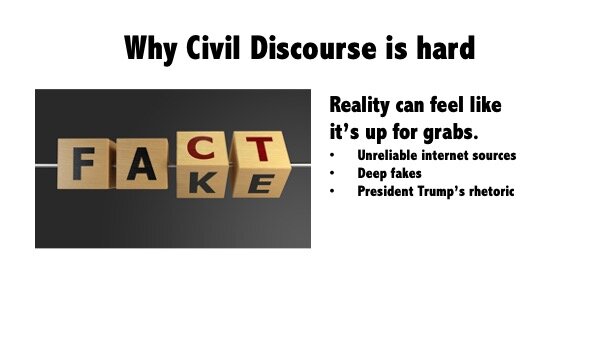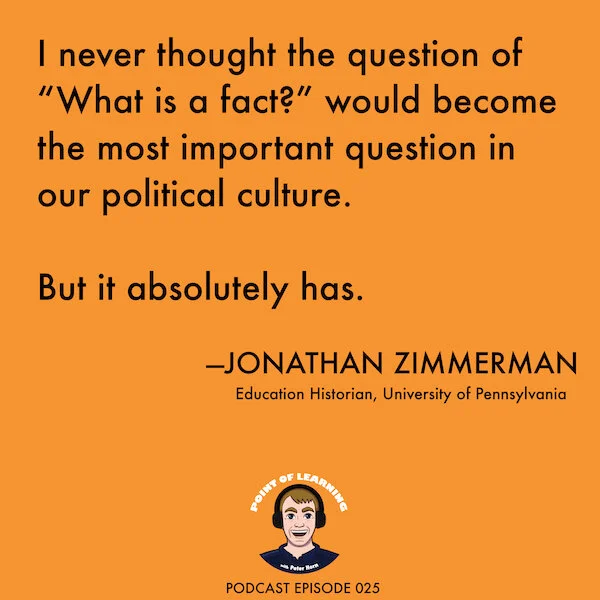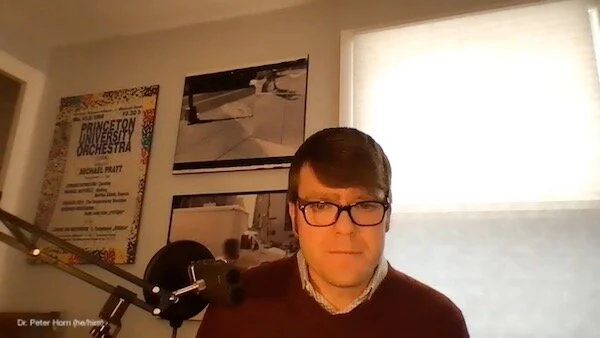
This bonus episode is a departure from my usual format in several ways. First, I answer more questions than I ask. Second, I’m the guest. Third, I didn’t really make the show—or at least, not the way I usually do! The lion’s share of tape today comes courtesy of the Pingry Politics Podcast, hosted and edited by the Politics Club president at the Pingry School in NJ, Marcus Brotman. When I showed up (via Zoom) to lead a session on civil discourse sponsored by the club just a few days after the January 6th Insurrection at the Capitol, Marcus asked me if it was okay to record the show for the club’s own podcast. Well of course, he had me at “podcast”! After I listened to it, I thought he’d done such a nice job that I asked permission to share it here, which he kindly granted. Despite the unusual origin of this episode, it very much aligns with the project of my podcast: sharing the best ideas I know about what and how and why we learn. In this case, it’s on one of my favorite topics that I get to work on with faculty and students, one that schools so often overlook as they prepare young citizens: civil discourse, or how we practice talking respectfully with one another about topics of shared concern.
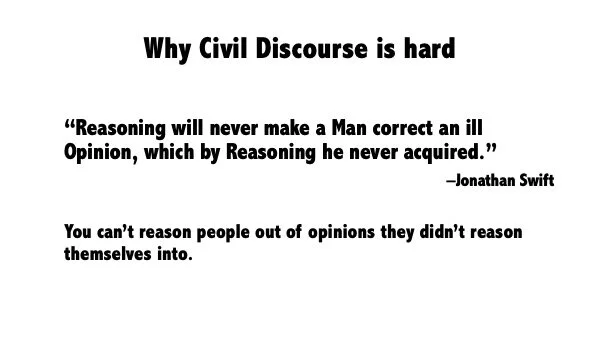
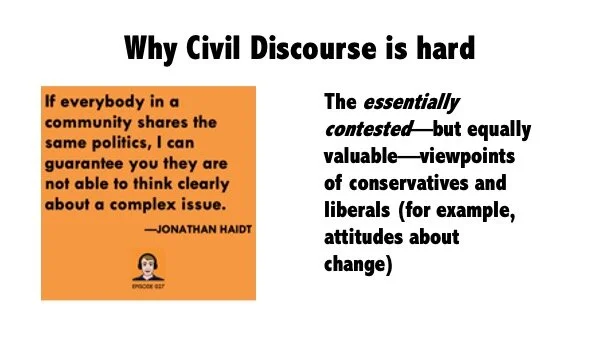
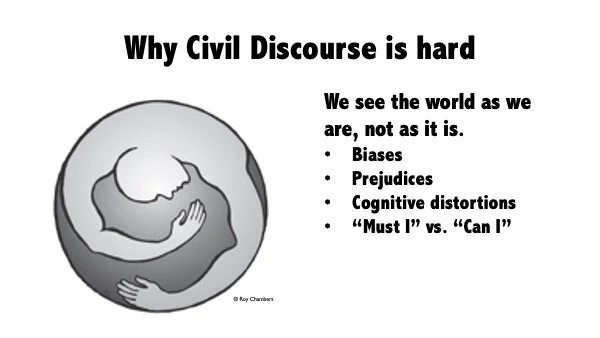
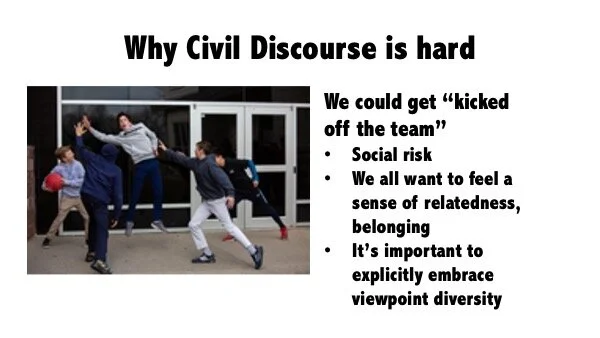
Select Slides from my Powerpoint presentation for the politics club
After some intro and explanation about the episode, the civil discourse session begins with a 17-minute overview of concepts I thought were important, based on students’ preliminary questions that Marcus shared with me as I was preparing for the session. The remainder of our time is spent in Q & A with the approximately 25 students who chose to attend this after-school event. There won’t be a YouTube companion for this bonus episode, so below are some of the slides and images I refer to throughout the overview and Q & A.
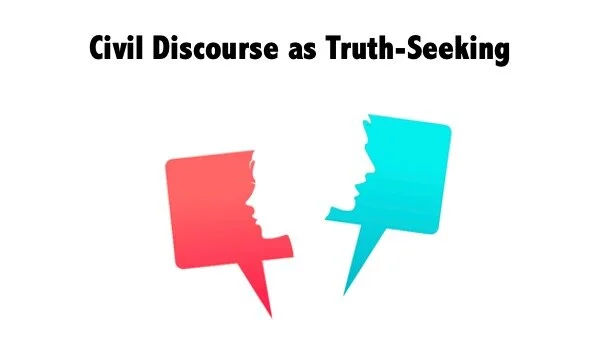
Civil discourse is a specialized kind of conversation, not the kind of thing you can engage in by turning to a stranger behind you in line at Panera. It’s not a debate, and it’s not about “winning.” It’s about seeking the truth on complex issues of shared concern.
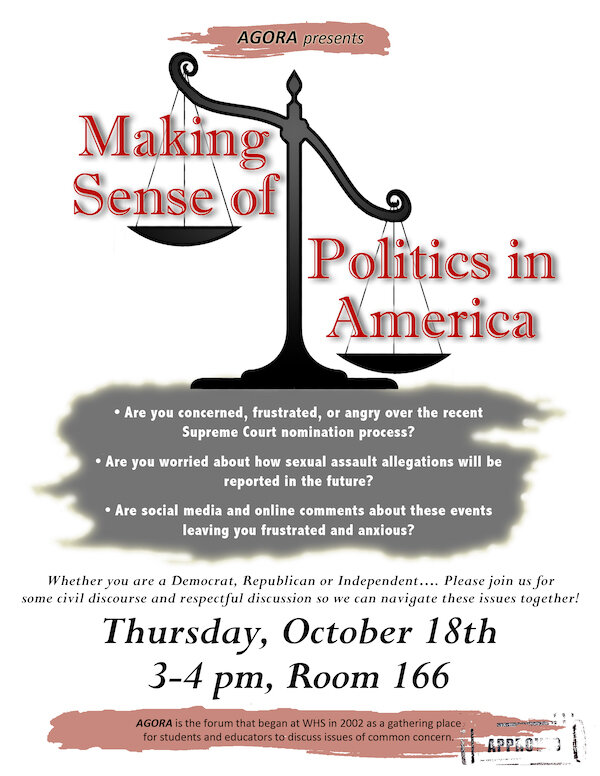
This poster, designed by former Westfield (NJ) High School colleague and friend Roy Chambers, is an example of the kinds of ads we would regularly produce for Agora, a forum for open discussion for students and faculty at WHS.
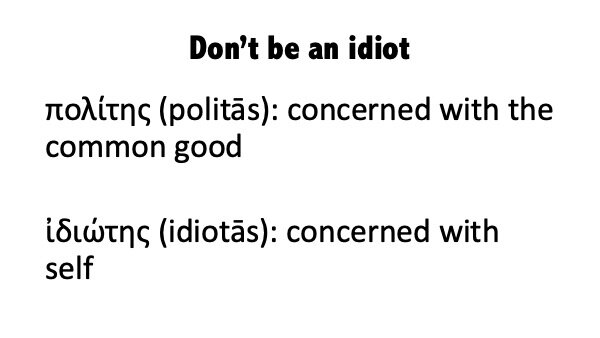
The Greek root of “politics” means “city,” as in Indianapolis. The root of “idiot” is self-serving.